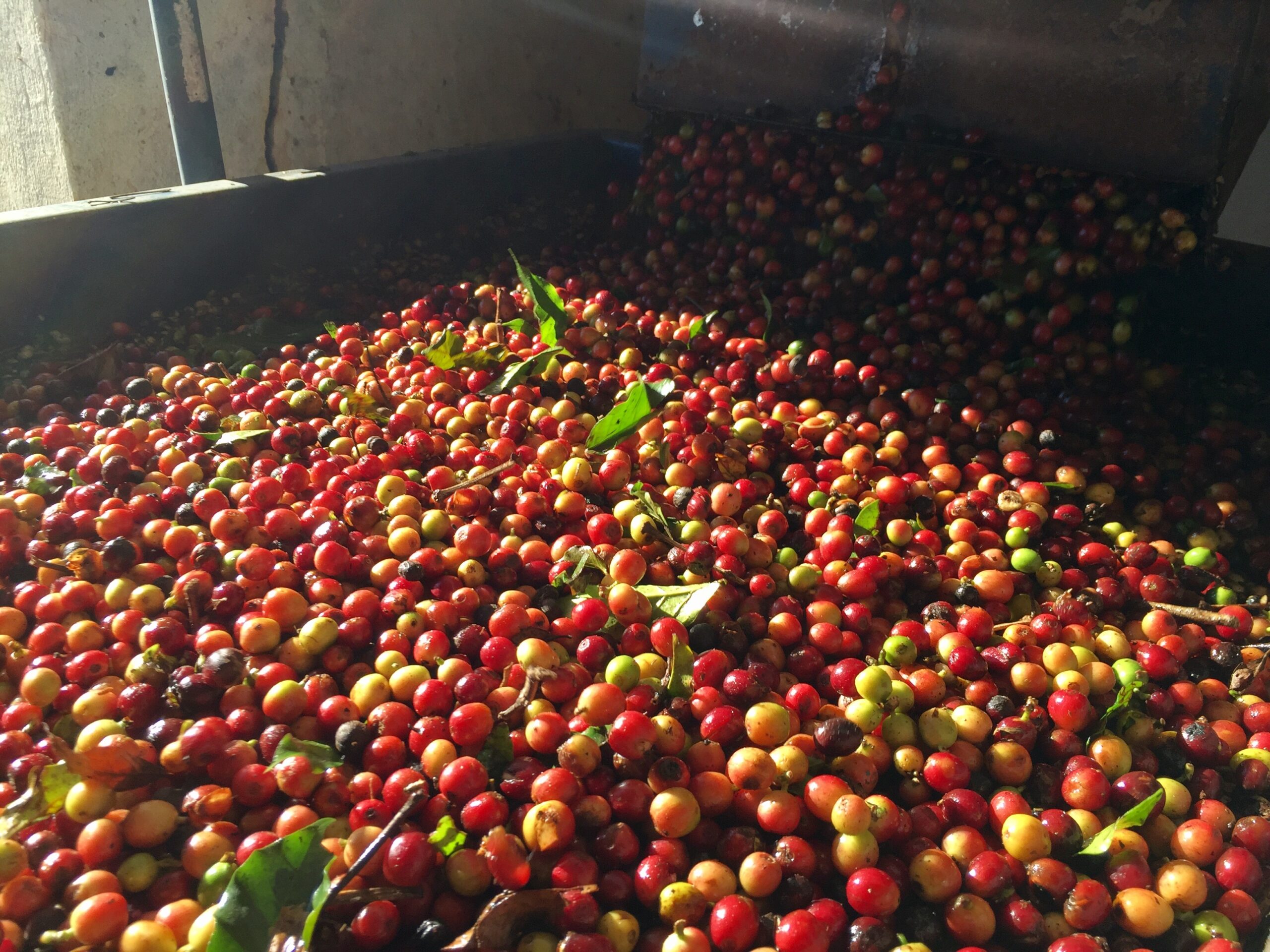
Brazil’s upcoming coffee crop keeps getting revised upwards. Estimates currently vary quite widely, from CONAB’s early projection of 66.2 million bags to more recent market estimates now pointing above 70 million bags, with some as high as 75.5 million bags.
According to CONAB’s first survey for the 2026 crop, the 66.2 million bags estimate already represents a 17.1% increase compared to the previous season. This growth is being driven by a combination of factors typical of a positive biennial cycle, including a 4.1% increase in productive area, now estimated at around 1.9 million hectares, alongside more favourable weather conditions and continued adoption of better farming practices.
Productivity is also expected to improve, with yields projected to reach around 34.2 bags per hectare, up 12.4% year-on-year. If confirmed, this would mark a new record crop, surpassing the previous high of 63.1 million bags harvested in 2020.
For Arabica, which is more affected by biennial cycles, CONAB expects production to reach around 44.1 million bags, representing a 23.3% increase compared to the previous season. This growth is driven by the expansion of productive area, more favourable weather conditions, and the positive phase of the biennial cycle.
Robusta (Conilon) is also expected to see gains, with production projected at around 22.1 million bags, up 6.4% year-on-year. This could mark another record for the variety, supported by increased productive area and favourable growing conditions so far.
A mix of favourable weather, good rainfall, and farm management is driving this. Many farms are coming back from pruning cycles, others delayed pruning last year due to market conditions, and new plantings are starting to produce their first harvest. On top of that, growers have been investing more in nutrition and plant health over the past couple of years, which is clearly feeding through into higher productivity.
Will Prices Drop?
Not necessarily. And definitely not immediately.
Even with a large crop, there are several factors that can keep prices supported. International logistics remain a challenge, the Brazilian real has strengthened against the dollar, and many producers are in a much healthier financial position than in previous years. That means they’re under less pressure to sell at prices they feel don’t make sense or don’t cover their costs.
At the same time, global coffee consumption continues to grow, particularly driven by increasing demand in markets like China, Indonesia and Vietnam. There are also several other moving parts to consider, including exchange-certified stocks, which remain relatively tight and continue to influence short-term pricing dynamics.
In other words, a bigger crop doesn’t automatically translate into cheaper coffee overnight.
But one thing is certain: this year is promising a solid crop, and we can’t wait to taste these healthy, delicious beans.
Written by: Bruna Costa